

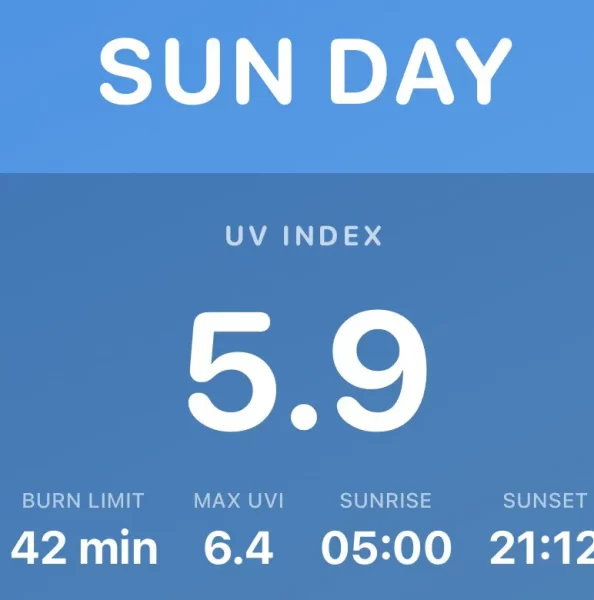
Sun Day Tracks Your UV Exposure For You
Jack Dorsey, co-founder of Twitter, has released a minimalist wellness app called Sun Day that tracks UV exposure and estimates vitamin D synthesis based on skin type, location, and clothing inputs. Currently in beta on iOS TestFlight, the app reflects growing interest in preventive health tools tied to dermatologic well-being.
How Sun Day Works
Sun Day isn’t another glossy lifestyle app. It’s a stripped-down tool built for a single purpose: tracking how much sunlight you’re getting. Users enter details like skin type, clothing coverage, and location. The app then pulls real-time UV Index and weather data to estimate how much vitamin D you might be synthesizing during outdoor sessions.
Instead of running passively in the background, Sun Day requires you to manually start and stop a session. Once finished, it calculates your estimated vitamin D production and gives you a running total for the day.
It’s simple by design—almost like a mindful reminder to pay attention to how long you’ve been in the sun.
Why This Matters for Skin Health
For dermatologists and skincare professionals, an app like Sun Day reflects a growing consumer interest in quantifying wellness behaviors. Patients often struggle with finding the right balance between sun protection and vitamin D synthesis. They hear conflicting advice: “Wear sunscreen every day” versus “Get some sun for bone health.” This app aims to give users a sense of control by translating UV exposure into tangible data.
However, Sun Day is not a medical tool. Its calculations are based on generalized models and user input, which means accuracy is limited. Still, the concept highlights an opportunity: patients want personalized guidance around sun safety, and they’re looking to technology for help.
The Good, The Bad, and The Caution
The appeal is obvious: Sun Day turns something invisible—UV exposure—into data you can see. That could encourage better habits, like applying SPF more consistently or avoiding peak UV hours. On the flip side, without proper context, the app could mislead users into thinking more sun is always better for vitamin D, overlooking the well-documented risks of photoaging and skin cancer.
Another limitation is that it doesn’t integrate with wearable sensors or clinical-grade devices—at least not yet. Accuracy still depends heavily on self-reported inputs, like what you’re wearing or whether you’re in direct sunlight.
Could Dermatology Embrace Apps Like Sun Day?
Tools like Sun Day raise interesting questions. Could dermatology clinics one day recommend UV-tracking apps to help patients manage their sun exposure? Or even integrate similar features into professional-grade skin health apps? While we’re not there yet, the trend toward tech-enabled skin awareness is undeniable.
For now, Sun Day works best as an educational tool—a starting point for conversations about UV safety, vitamin D, and the importance of sunscreen.