
Studies Show AbbVie and Galderma Lead AI Citations in Aesthetics
Artificial intelligence is quickly becoming a first stop for patients researching cosmetic treatments. Whether asking ChatGPT about dermal fillers or using Google’s AI Overviews to compare neuromodulators, patients are increasingly relying on AI-generated answers before scheduling a consultation.
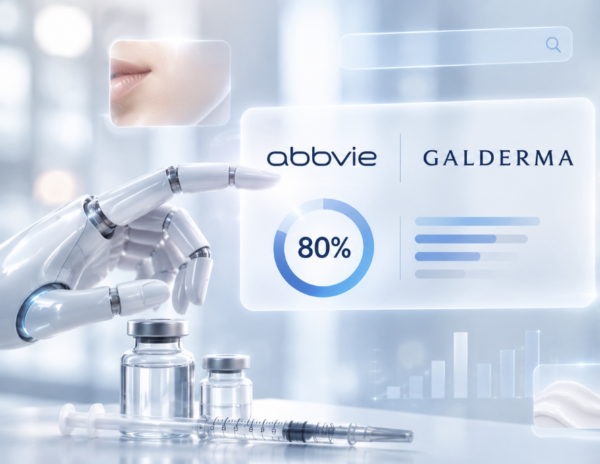
A new report from SW AI Communications suggests that only a handful of aesthetic companies are consistently appearing in those responses. According to the 2026 Med Spa & Aesthetic Medicine AI Visibility Index, AbbVie/Allergan and Galderma account for nearly 80% of pharmaceutical AI citations across ChatGPT, Claude, Perplexity, Gemini, and Google AI Overviews.
Measuring AI Visibility
The AI Visibility Index evaluated how leading AI platforms reference aesthetic medicine companies when responding to patient and provider questions.
Among pharmaceutical manufacturers, AbbVie/Allergan accounted for 47% of AI citations, while Galderma represented 33%. Together, the two companies controlled roughly four out of every five pharmaceutical citations. Merz Aesthetics and Revance made up most of the remaining 20%.
According to SW AI Communications, the report represents the first attempt to measure how generative AI platforms surface aesthetic medicine brands during routine searches, providing insight into which companies are becoming most visible as AI increasingly influences patient education.
AI Visibility Doesn’t Always Reflect Market Size
One of the report’s most notable findings is that AI visibility does not necessarily mirror company size or years in the market.
Among providers and marketplaces, RealSelf ranked as the highest visible marketplace despite serving a fraction of U.S. medical spas. Daxxify, introduced by Revance in 2023, ranked ahead of Merz’s Xeomin, which has been available for more than a decade. LaserAway also ranked among the most visible medical spa organizations despite operating significantly fewer locations than many competitors.
Conversely, several major aesthetic device manufacturers, including InMode, Cutera, Lutronic, BTL Industries, Solta Medical, and HydraFacial, did not appear among the top 25 AI citations. The findings suggest patients may be asking AI more about treatment outcomes and injectable products than specific devices.
The Growing Importance of AI Search
Unlike traditional search engines, generative AI delivers direct answers instead of lists of websites. As a result, the companies and educational resources cited within those responses may increasingly shape how patients learn about cosmetic procedures before visiting a practice.
For manufacturers, practices, and publishers, AI visibility is emerging as a new form of digital authority. Educational content that is accurate, well-structured, and supported by evidence is more likely to be referenced by AI systems as they generate responses.
The report also identified what researchers call a “visibility gap.” While the top 25 brands captured approximately 95% of all AI citation share, the remaining thousands of aesthetic practices collectively accounted for only about 5%, highlighting how concentrated AI visibility has become.
Looking Ahead
As generative AI becomes a larger part of how patients research aesthetic medicine, visibility within AI-generated responses may become just as important as traditional search rankings.
While the landscape will continue to evolve, the report suggests that companies investing in scientific evidence, educational content, and digital authority may be better positioned to remain visible as AI increasingly influences patient decision-making. For the aesthetic industry, the next competition may not be for the top spot on Google, but for a place in AI-generated answers.