
Revieve Reports Beauty Shoppers are Shifting Towards Diagnostics
Consumer behavior in beauty is evolving, with diagnostics and guided journeys becoming central to how people discover and purchase products. New data from Revieve’s 2025 Beauty & Wellness Index highlights a clear shift away from traditional e-commerce patterns toward more personalized, insight-driven experiences.
The report draws on large-scale behavioral data across global beauty brands and retailers, offering a closer look at how shoppers are interacting with AI-powered tools and digital consultations.
Key takeaways
- Beauty shoppers are increasingly relying on diagnostic-led and routine-based purchasing journeys
- Guided experiences are outperforming traditional e-commerce funnels in both completion and conversion rates
- Consumers are focusing more on texture, skin refinement, and multi-concern profiles
- Brands are prioritizing efficiency, while retailers are driving engagement through exploration and routine-building
- Engagement depth is emerging as a stronger indicator of purchase intent than checkout speed
The findings suggest that beauty commerce is becoming more non-linear. Instead of entering with a fixed intent, consumers are exploring, testing, and validating products through guided experiences.
A shift toward diagnostic-driven commerce
Beauty shopping is moving away from quick, transactional behavior and toward more layered, decision-making journeys. Consumers are increasingly using diagnostic tools, virtual try-ons, and guided recommendations before making a purchase.
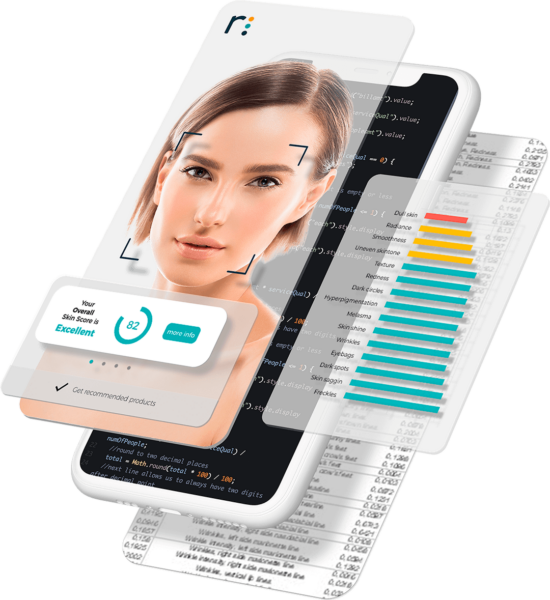
Rather than relying on search and selection alone, users are engaging with tools that help them better understand their skin and product needs. This shift is changing how brands structure their digital experiences.
Diagnostics are no longer just an added feature. They are becoming a core part of the infrastructure behind modern beauty e-commerce.
Consumer behavior and emerging skin concerns
The data shows that beauty engagement remains largely driven by digitally native users, with a strong female majority.
Across shopper journeys, the most common concerns include visible pores, dullness, acne, redness, dark circles, wrinkles, sagging, and hyperpigmentation.
At the same time, many consumers still lack clarity about their own skin type. While some report knowing their skin profile, a significant portion remain unsure, reinforcing the need for diagnostic tools that provide personalized insights.
For both skincare and makeup, guided diagnostics now play a key role across the full funnel, from initial discovery to final conversion.
How guided diagnostics are reshaping e-commerce
Several behavioral shifts stand out when compared to previous years:
- A majority of users now report multiple simultaneous skin concerns, often three or more
- Visible pores have overtaken acne as a leading concern in many journeys
- Engagement depth shows a stronger correlation with purchase intent than checkout speed
- Guided experiences maintain high completion rates, reaching over 70% across brands and retailers
These patterns suggest that beauty shoppers are no longer entering with a clear purchase decision. Instead, they begin with questions and rely on guided tools to build confidence before committing.
Guided journeys, including selfie-based diagnostics and virtual try-ons, are significantly improving both conversion rates and average order values.
Key behavioral trends shaping beauty routines
Visible pores become a primary concern
Consumer priorities are shifting from short-term breakouts to longer-term skin quality. Texture refinement and overall skin appearance are becoming more important in purchasing decisions.
Multi-concern profiles are now the norm
Shoppers are no longer focused on a single issue. Instead, they present layered concerns, such as dullness combined with pores, uneven tone, and sensitivity. This is driving demand for more personalized and flexible product recommendations.
Brands and retailers are optimizing differently
Brands are focusing on efficiency and hero products, while retailers are investing in deeper engagement. Longer sessions, product discovery, and bundled routines are becoming more important for conversion.
Makeup shopping is becoming experimentation-driven
Consumers are testing more shades and variations before purchasing. Try-on tools are increasing conversion rates, while natural and radiant finishes continue to outperform matte looks.
This shift reflects a broader change in digital behavior, where experimentation comes before decision-making.
The future of beauty commerce
Revieve’s data points to a fundamental shift in how beauty products are discovered and purchased. Consumers are no longer following a linear path from search to checkout.
Instead, they are engaging in guided, diagnostic-driven journeys that prioritize understanding, personalization, and confidence.
As a result, engagement quality—not speed—is becoming the most important driver of conversion. Brands that invest in these experiences are likely to see stronger performance as beauty commerce continues to evolve.