

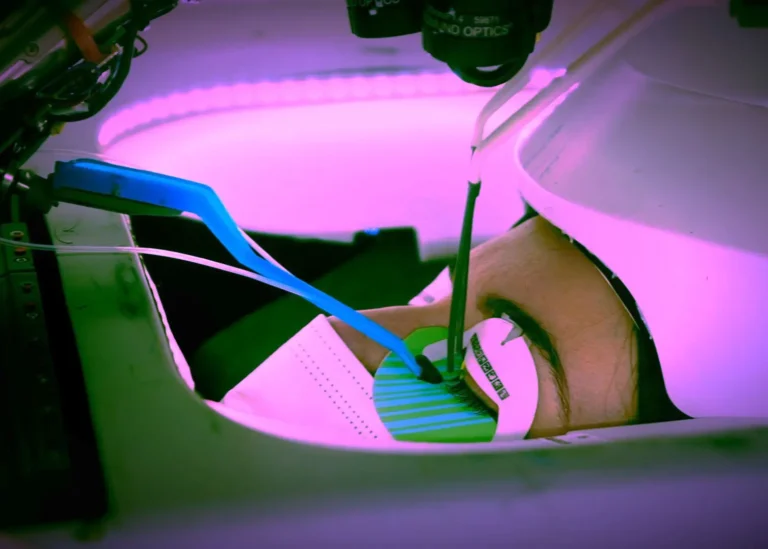
LUUM Introduces Next-Generation AI Lash Robot
LUUM has launched a new version of its AI-driven lash extension robot as it expands into additional retail locations, including partnerships with Ulta Beauty and Nordstrom across the United States. The Oakland-based company designed the upgraded system to make lash services faster without sacrificing precision or safety. By improving efficiency, LUUM aims to bring the technology into both salon settings and retail environments.
A significant advancement for beauty technology
One of the most notable improvements is the system’s ability to treat both eyes at the same time. This change could reduce a full lash appointment to just over 30 minutes, a major decrease compared to traditional services.
CEO Jio Lawson described the launch as more than a technical upgrade. She emphasized that it marks a meaningful step forward for the industry. Shorter service times improve efficiency, increase consistency, and reduce the physical strain associated with lash application.
The shift to simultaneous application developed over time. Lawson explained that the system builds on years of testing and data from earlier versions of the robot, including insights from thousands of real client sessions.
The system relies on a complex network of 44 motors and 34 robotic axes that work together in real time. Coordinating this level of precision while maintaining comfort and accuracy presents a significant engineering challenge.
Safety considerations built into the design
Lash application takes place in a sensitive area, so LUUM prioritizes safety throughout the system. The hardware uses lightweight, flexible applicators that interact gently with natural lashes. The software also plays a critical role in maintaining safety. For example, the system automatically pauses if a client moves. It resumes only when the client remains still.
The company also refined its safety features using real-world data from salon environments. Lawson noted that this feedback led to additional safeguards. These include controlled access to the device, protection against interruptions, and mechanisms that secure the system during operation.
Positioning automation as a support tool
LUUM designed the robot to support lash artists, not replace them. The system handles the most repetitive and physically demanding tasks, allowing for faster and more consistent application. At the same time, professionals remain central to the experience. Lash technicians lead consultations, choose styles, and manage the overall client experience. Lawson emphasized that creativity and personalization still depend on skilled professionals. She also highlighted the potential for greater customization. Artists can design individualized lash styles and reproduce them across future appointments. This creates a more consistent experience for clients.
Growth and retail expansion
LUUM plans to bring its technology to six additional locations as part of its next phase. The company expects installations in Nordstrom and Ulta Beauty stores by early 2026. It is also developing shop-in-shop studio concepts within these retail environments. Lawson explained that LUUM selected these markets based on strong demand for lash services. She also noted that consumers in these areas are more open to adopting new beauty technologies.
Scaling the business will require careful coordination. LUUM must align manufacturing, training, and supply chain operations to deliver a consistent client experience. The company’s expansion could also impact the broader industry. As demand grows, LUUM may become a major purchaser of artificial lashes, influencing suppliers on a global scale.
Looking ahead, Lawson suggested that the underlying technology could extend beyond lash services. This could open the door for automation in other areas of beauty treatments.