
L"Oréal's Future: Beauty Meets AI
The Shift from Mass Beauty to Individual Precision
For decades, the beauty industry relied on “beauty for all,” a philosophy that aimed to capture the widest possible audience with universal products. However, L’Oréal’s current AI strategy signals a definitive move toward “beauty for each.” This transition is driven by the recognition that every consumer has unique skin tones, concerns, and preferences that cannot be met by a single shelf of products. AI acts as the bridge between L’Oréal’s massive global inventory and the individual needs of a person sitting in their living room.
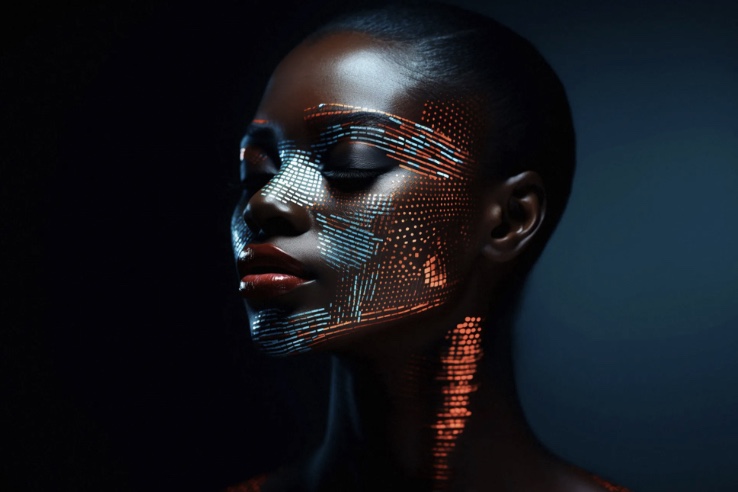
By utilizing machine learning and advanced algorithms, the company can now analyze a user’s facial features and skin health through a smartphone camera with clinical levels of accuracy. This shift is not merely a marketing gimmick; it is a strategic response to the high return rates and consumer frustration associated with online shopping. When a consumer can “try on” a lipstick virtually or receive a personalized skin diagnostic, the uncertainty of the purchase evaporates, creating a more efficient and satisfying retail ecosystem.
Scaling Creativity through the CREAITECH GenAI Lab
One of the most ambitious pillars of L’Oréal’s strategy is its internal generative AI laboratory, known as CREAITECH. As the demand for digital content explodes across social media platforms like TikTok and Instagram, the traditional cycle of content creation—involving months of planning, photo shoots, and editing—has become a bottleneck. CREAITECH represents an “augmented marketing” model where AI does not replace the human touch but accelerates it.
This lab allows L’Oréal’s 37 global brands to maintain their distinct visual identities while generating thousands of localized, on-brand images and videos in a fraction of the time. By training generative models on the specific visual “codes” of brands like Lancôme or Maybelline, the company ensures that AI-generated content remains high-quality and consistent. This capability allows the company to respond to viral trends in real-time, ensuring that they remain culturally relevant in a fragmented digital landscape.
The Rise of the Personal Beauty Assistant
Beyond content creation, L’Oréal is focusing on “agentic AI”—tools that can think, reason, and converse. The flagship of this effort is the “Beauty Genius,” a generative AI-powered personal assistant. Unlike traditional chatbots that rely on pre-written scripts, Beauty Genius utilizes a proprietary chain of reasoning to handle complex, multi-step queries. A user can ask for a complete morning routine that addresses both acne and sensitivity, and the AI will synthesize dermatological data with product knowledge to provide a tailored answer.
This assistant serves a dual purpose. First, it democratizes expertise, giving every consumer access to the kind of advice they might normally only receive from a high-end beauty counter or a dermatologist. Second, it creates a safe space for consumers to discuss sensitive concerns, such as hair loss or skin conditions, in a private digital environment. By collecting data from these interactions, L’Oréal gains a deeper understanding of “unmet needs,” which then feeds back into their research and development cycle for future products.
Inclusivity and Accessibility through Smart Technology
A core component of L’Oréal’s AI strategy is the commitment to inclusivity, ensuring that technology serves populations that have historically been overlooked by the beauty industry. This is best exemplified by innovations like HAPTA, a computerized, motion-stabilizing makeup applicator designed for individuals with limited hand or arm mobility. While AI is often discussed in terms of digital interfaces, L’Oréal is applying it to hardware to solve physical barriers.
Inclusivity also extends to the data sets used to train their AI. One of the biggest risks of AI in beauty is “algorithmic bias,” where a tool might only work well on certain skin tones. L’Oréal has countered this by training its diagnostic tools on tens of thousands of inclusive images, ensuring that their recommendations are accurate for people of all ethnicities and ages. By prioritizing diversity in their data, they are building a more responsible and ethical version of AI that can truly serve a global population.
Redefining the Future of Beauty Services
Looking ahead, L’Oréal’s strategy implies that the future of beauty is as much about the “service” as it is about the “bottle.” We are moving into an era where a skincare cream may come with a digital twin—an AI coach that tracks your progress and adjusts your usage based on the weather or your stress levels. The integration of infrared technology in tools like the AirLight Pro hair dryer further shows how the company is using advanced physics and AI to create products that are more efficient and environmentally friendly.
The ultimate goal of L’Oréal’s AI strategy is to create a seamless loop between the digital and physical worlds. Whether it is through bioprinted skin used for testing products without animal cruelty or AR mirrors in retail stores, the company is proving that “Beauty Tech” is the new standard. By embracing AI not as a replacement for beauty but as an augmentation of it, L’Oréal is positioning itself to lead the industry for another century, ensuring that every individual can find their own unique version of beauty through the power of a click.
Sources: https://beautymatter.com/articles/inside-loreals-ai-strategy