
L’Oréal Explores 3D AI Technology for Product Imagery
L’Oréal Group is expanding its use of artificial intelligence to improve how brands create product imagery. At VivaTech 2025, the French beauty company announced a collaboration with the startup Omi to develop 3D generative AI tools for brand visuals.
The partnership focuses on using Omi’s PhotoDrop technology, which converts physical products into detailed 3D digital models. These digital twins allow brands to generate product images more efficiently for marketing and e-commerce.
According to Omi, companies such as Clarins and Nestlé are already using the technology.
Generative AI aims to streamline content creation
Omi’s PhotoDrop platform allows brands to upload or generate their own backgrounds and place 3D models directly into those scenes. Teams can adjust scale, reposition products, or update visual elements without the need for traditional product photography.
L’Oréal plans to integrate the technology into its GenAI Beauty Content Lab, known as Createch. The goal is to simplify image production, speed up product launches, and reduce the time and cost involved in creating visual content.
As competition in online retail continues to grow, brands are under pressure to deliver high-quality visuals quickly. AI-generated product imagery offers a way to produce scalable content while maintaining consistent quality.
Omi is also developing additional tools to expand these capabilities. One upcoming feature, VideoDrop, will extend PhotoDrop’s technology into video creation. The company is also working on a “learning loop” system designed to help marketers improve content performance using data insights.
Expanding AI across the beauty ecosystem
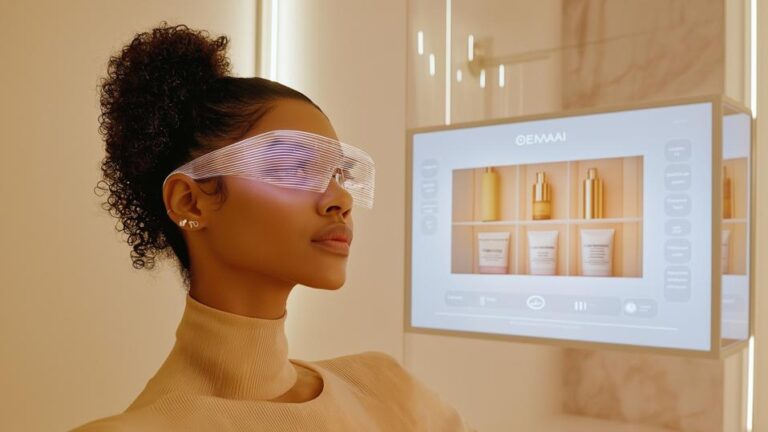
Alongside the Omi partnership, L’Oréal also introduced another AI-focused initiative. The company announced a collaboration with NVIDIA to build Noli, an AI-powered multi-brand beauty marketplace.
The platform includes Noli.com, which runs on L’Oréal’s AI Refinery technology and uses NVIDIA infrastructure through Microsoft Azure. The system supports rapid experimentation, scalable personalization, and responsible AI deployment.
The platform analyzes more than one million skin data points and thousands of cosmetic formulations. Using this information, it functions as an AI-driven beauty matchmaker that creates a personalized beauty profile for each user.
Based on this profile, the system recommends tailored beauty products that can be delivered directly to consumers.