
LLMs in Dermatology: Innovation, Limitations, and What’s Next
Large Language Models, or LLMs, like GPT-4 are everywhere right now, from writing essays and creating videos, to powering chatbots. But they’re also popping up in unexpected places, including dermatology clinics, research labs, and even the drug discovery pipeline.
If you’ve ever wondered whether AI is coming for your skincare routine (or your SOAP notes), the answer is: maybe, but not in the way you think.
How Dermatologists Are Using LLMs Today
Recent news has revealed that around 65% of dermatologists are already using LLMs for the unglamorous stuff like:
- Writing prior authorizations
- Drafting visit summaries
- Creating educational handouts for patients
These tools save time, cut down on repetitive typing, and help with clarity. About 1 in 5 dermatologists say they use them weekly or even daily.
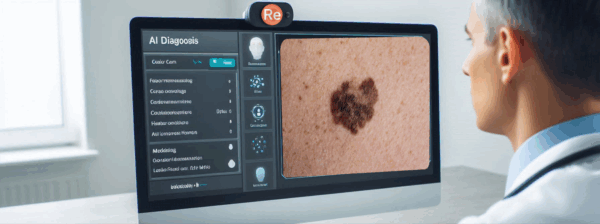
But when it comes to more clinical uses, like diagnosis or treatment recommendations, most experts are urging caution. One of these experts, Dr. Roxana Daneshjou from Stanford, has been studying how these models perform in real-world medical scenarios.
Where Things Get Messy: Mistakes, Bias, and Hallucinations
Dr. Daneshjou put several models to the test, including GPT-3.5, GPT-4, and GPT-4V (which can “see” images). The results were…mixed.
In about 20% of cases, the LLMs gave either flat-out wrong answers or dangerous suggestions. GPT-4 Vision in particular tended to misidentify skin lesions, often flagging benign ones as cancerous. Not exactly something you want to rely on in a clinical setting.
There’s also the issue of bias. Because these models are trained on datasets that may lack representation of darker skin tones or rare conditions, they can struggle to generalize their “knowledge” to everyone. That’s a serious limitation, especially in a field like dermatology where visual presentation matters so much.
So What Are They Good For?
When used responsibly, LLMs are proving to be helpful in a few key ways:
- Cutting down admin time
- Drafting research proposals or patient handouts
- Brainstorming content or simplifying complex topics for patients
They’re not ready to replace your clinical judgment, but they can help reduce mental fatigue from all the paperwork, and that counts for something.
What About AI-Designed Skin Treatments?
Here’s where it gets futuristic. A team at MIT recently developed a tool called Llamole (yes, like “molecule” meets “llama”) that combines LLMs with chemistry models to design brand-new molecules based on plain English prompts.
You can literally type in something like “a cream that reduces post-inflammatory hyperpigmentation without irritating sensitive skin,” and the model starts suggesting molecular structures and even outlines how to synthesize them.
The early results are promising. Synthesis success rates jumped from 5% to 35% when researchers used this model to plan reactions. That could mean big things for dermatology, like:
- Faster development of new topicals
- Custom skincare ingredients
- More targeted treatment options for chronic conditions like acne, eczema, or melasma
This is still very much in the research phase, but it’s one of the most exciting directions LLMs are heading in.
Where Do We Go From Here?
LLMs are powerful tools, but they’re not magic. In dermatology, they’re best used as support systems, not decision-makers. Whether you’re a provider writing notes or a researcher brainstorming your next product, think of LLMs as helpful interns: fast, occasionally brilliant, but always in need of supervision.
As more clinics and labs experiment with these tools, it’ll be up to dermatology professionals to set the standards, making sure accuracy, safety, and equity stay front and center.