
Predictive Formulation Skincare vs. Traditional Product Development
The traditional skincare formulation process relies heavily on trial and error. A chemist develops an idea, whether it involves a target texture, active ingredient combination, or sensory profile, and then begins testing. Teams mix ingredients, evaluate stability, assess sensory outcomes, and refine formulations through repeated rounds of experimentation.
Even with experienced researchers, a new skincare product can take 18 to 36 months to move from concept to launch. Stability testing alone often requires 6 to 12 months. In many cases, scientists do not discover ingredient interactions that affect stability or efficacy until late in development.
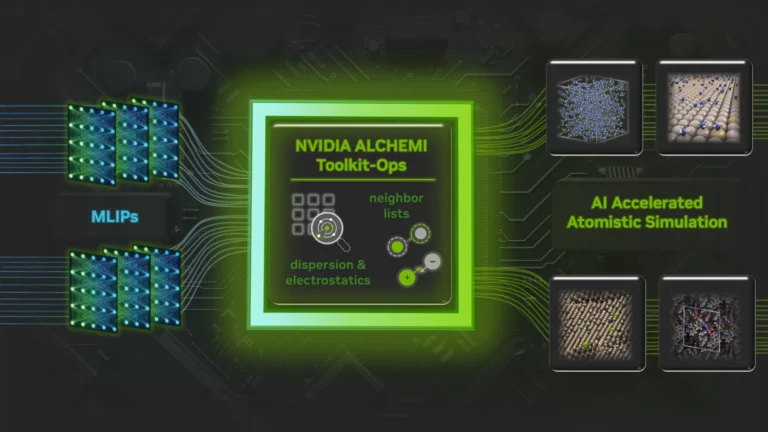
Predictive formulation skincare aims to change this process. The partnership between L’Oréal Research & Innovation and Nvidia, built around Nvidia’s Alchemi AI framework, represents a major shift in beauty R&D. Instead of relying solely on physical testing, researchers can use AI to simulate ingredient interactions, predict formulation stability, and evaluate sensory outcomes before laboratory work begins.
How Nvidia Alchemi Powers Predictive Formulation Skincare
Nvidia’s Alchemi AI framework serves as a molecular simulation and machine learning platform for beauty R&D. L’Oréal has adapted the technology to support skincare product development at multiple levels.
At the molecular level, the system analyzes how ingredients interact. It evaluates factors such as solubility, aggregation behavior, viscosity, and phase stability. At the formulation level, machine learning models draw on L’Oréal’s extensive formulation database to predict stability outcomes, sensory profiles, and ingredient compatibility.
As a result, the platform can evaluate thousands of potential ingredient combinations in the time it would take a formulation chemist to test only a few. Once researchers identify promising candidates computationally, laboratory testing can validate and refine those predictions. This approach dramatically narrows the search space and accelerates product development.
Why Data Is the Real Competitive Advantage
While Nvidia provides the AI infrastructure, L’Oréal’s competitive advantage comes from its proprietary data. The company has accumulated decades of formulation records, stability testing results, sensory panel evaluations, consumer feedback data, and clinical efficacy studies.
This extensive dataset gives predictive formulation skincare models a unique foundation for training and optimization. As a result, the partnership is difficult for competitors to replicate.
The true competitive moat is not the AI model itself. Companies can license, rebuild, or improve machine learning models over time. However, proprietary formulation intelligence is much harder to recreate. Consequently, beauty companies are investing heavily in internal data infrastructure and machine-learning-ready R&D systems.
How Predictive Formulation Could Reshape the Beauty Industry
The impact of predictive formulation skincare extends beyond L’Oréal. Contract manufacturers, ingredient suppliers, and emerging beauty brands may all experience the effects of shorter development timelines and changing R&D requirements.
For ingredient suppliers, predictive formulation creates new expectations around data quality. Suppliers that provide machine-readable information on solubility, ingredient interactions, and stability performance will likely become preferred partners. In contrast, companies that fail to provide structured scientific data may become less competitive in AI-assisted formulation workflows.
Contract manufacturers face a similar shift. As beauty brands arrive with more precise, computationally validated formulation requirements, manufacturers may spend less time on exploratory development and more time on optimization and production. Those that invest in AI formulation capabilities will be better positioned to capture higher-value projects.
The Future of Predictive Formulation Skincare
One of the most significant future applications of predictive formulation skincare involves active delivery optimization and regulatory science. Researchers are already exploring whether AI can predict dermal penetration, bioavailability, and interaction effects for new active ingredients.
If successful, these capabilities could reduce the time and cost required to generate safety data. This would accelerate product development while supporting more efficient regulatory submissions.
The potential impact on UV filter innovation is particularly important. For decades, the FDA approval process created significant barriers for new sunscreen filters entering the U.S. market. Predictive AI could reduce some of the experimental burden associated with safety testing, helping innovative UV filters reach consumers more quickly.
The same opportunity exists for novel peptides, cosmeceutical ingredients, and advanced delivery systems. Ultimately, the infrastructure supporting predictive formulation skincare today may help create a fundamentally different product development pipeline in the years ahead.