
The Growth of AI Beauty Diagnostics
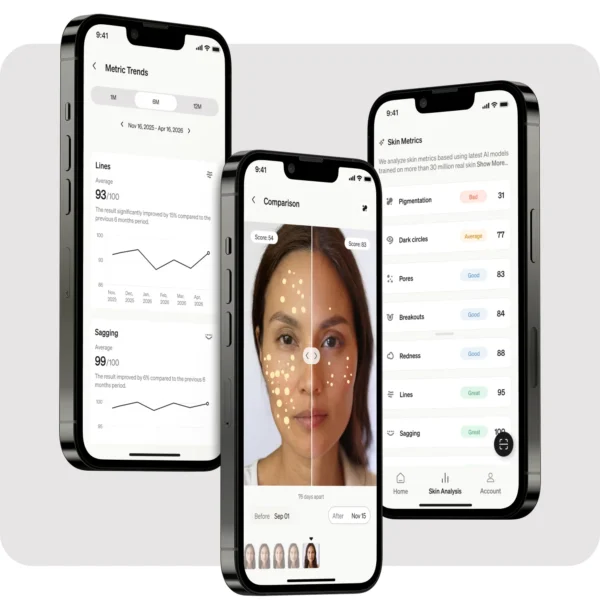
AI beauty diagnostics have become one of the fastest-growing segments of beauty technology. Consumers can now find AI-powered skin analysis tools in retailer apps, brand websites, and in-store experiences. These platforms promise to evaluate concerns such as wrinkles, hydration, pigmentation, and pore size before recommending personalized skincare products.
At first glance, the value proposition appears straightforward. Brands use AI to provide more personalized product recommendations and improve the customer experience.
However, a deeper look reveals a more important question: what are AI beauty diagnostics really designed to optimize? The answer extends beyond skincare recommendations and touches on data strategy, privacy, clinical validation, and long-term business value.
The Data Strategy Behind AI Beauty Diagnostics
When a consumer uses an AI beauty diagnostic tool, several things happen at once.
The user receives a result, such as a skin score, concern analysis, or product recommendation. Meanwhile, the brand collects valuable information. This may include facial images, demographic information, self-reported concerns, engagement patterns, and purchasing behavior.
Over time, this data becomes increasingly valuable. Companies can analyze which recommendations lead to purchases, how consumers respond to products, and how skin assessments change across multiple sessions.
As a result, AI beauty diagnostics do more than recommend products. They help companies build longitudinal consumer datasets, improve recommendation algorithms, strengthen personalization capabilities, and create competitive advantages that are difficult for rivals to replicate.
The Clinical Validation Challenge
Not all AI beauty diagnostic tools are created equally. In fact, the difference between the most clinically credible platforms and the least validated tools can be substantial.
One important consideration is the quality of the training data. Algorithms trained primarily on lighter skin tones may perform less accurately on individuals with skin of color. This creates not only ethical concerns but also potential clinical risks and reputational challenges.
The claims made by the platform also matter. There is a significant difference between estimating visible skin characteristics and diagnosing a medical condition. For example, identifying signs of reduced hydration from image analysis is not the same as diagnosing dehydrated skin.
Validation data is equally important. Companies developing AI beauty diagnostics should be able to provide evidence supporting their performance claims. Ideally, this includes peer-reviewed studies or, at minimum, transparent validation data demonstrating performance across diverse populations and imaging conditions.
Without this evidence, brands and investors should approach performance claims with caution.
Key Players in the AI Beauty Diagnostics Market
Several companies have emerged as leaders in AI beauty diagnostics, each taking a different approach.
Haut.AI has focused on clinically oriented applications, including skin atlas development, predictive aging visualization, and privacy-preserving facial anonymization technologies. This approach may provide stronger opportunities for clinical collaboration and regulatory alignment.
Perfect Corp. combines skin analysis with virtual try-on technology and benefits from significant consumer reach and retail integration. Its scale provides important data advantages, although discussions around demographic performance and validation remain relevant.
CAIOME takes a different approach by incorporating microbiome analysis into personalized skincare recommendations. While this requires a more involved consumer experience, it offers access to deeper biological data and creates opportunities for more differentiated personalization.
Together, these companies highlight the variety of business models emerging within the AI beauty diagnostics ecosystem.
Privacy and Regulatory Considerations
Privacy remains one of the most important issues facing AI beauty diagnostics.
Many of these platforms collect facial biometric information, which falls into a highly regulated category of personal data. In the United States, the Illinois Biometric Information Privacy Act (BIPA) has become one of the most influential legal frameworks governing the collection and use of biometric information.
Companies deploying AI skin analysis tools must carefully manage consent procedures, data retention policies, and third-party data sharing practices to remain compliant.
European markets present additional challenges. Under GDPR, facial biometric information often requires explicit consumer consent and enhanced privacy protections.
As privacy regulations continue to evolve, companies that invest early in privacy-by-design frameworks may gain both regulatory and competitive advantages.
Why Clinician Partnerships Matter
For companies developing AI beauty diagnostics, clinical credibility may become one of the most important differentiators over the next decade.
The strongest path forward involves genuine collaboration with dermatologists and academic medical centers. These partnerships can support clinical validation studies, generate peer-reviewed evidence, and help establish trust among consumers and healthcare professionals.
Ultimately, the AI beauty diagnostic platforms most likely to succeed will combine strong technology, responsible data practices, meaningful clinical validation, and consumer-friendly experiences. In this rapidly evolving category, dermatologist involvement is not only scientifically valuable but also commercially important.